
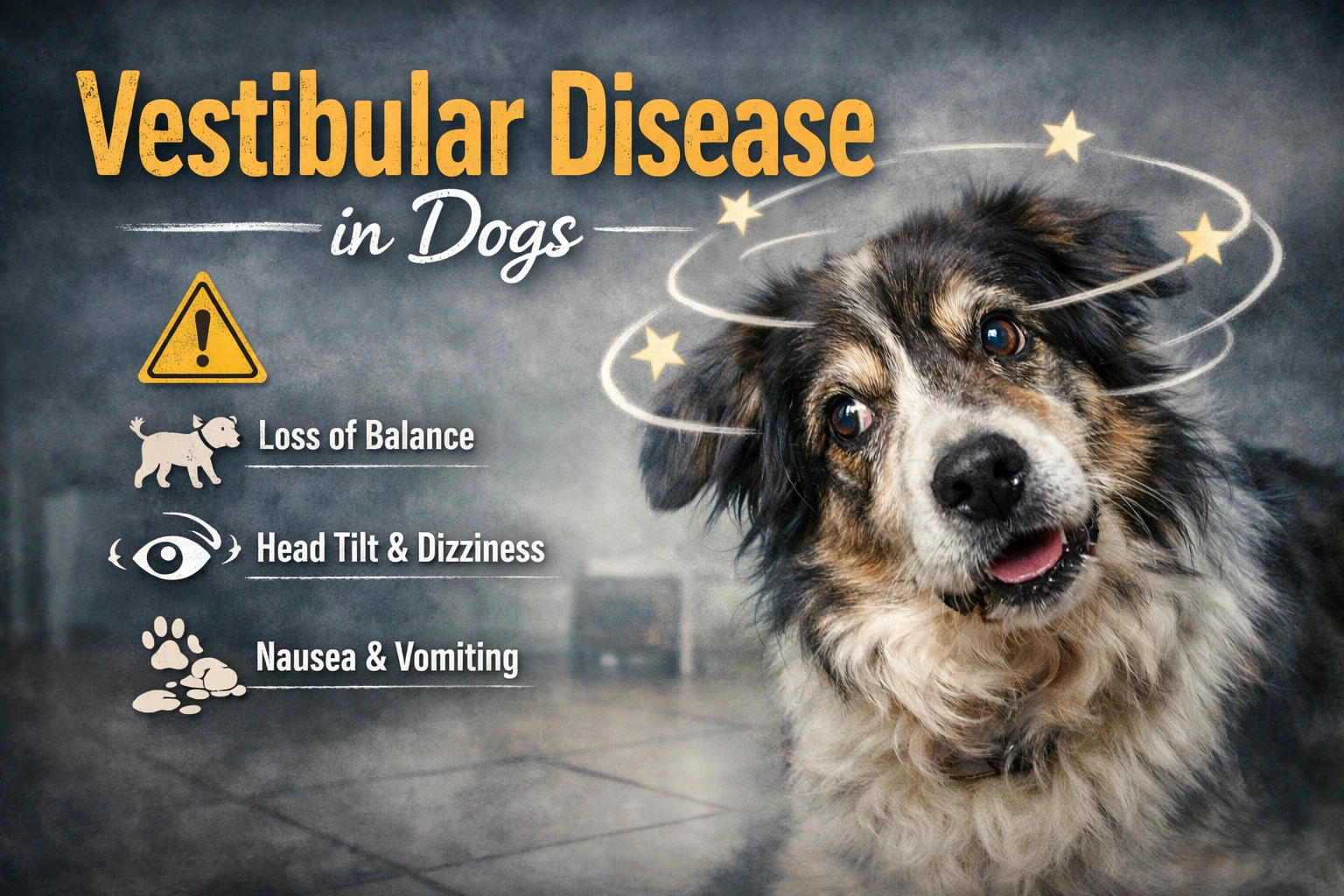
Understanding Vestibular Disease in Dogs: A Comprehensive Guide to Recovery and Care
Watching your canine companion suddenly lose their balance, tilt their head, or stumble as if intoxicated is a terrifying experience for any pet owner. These alarming clinical signs are the hallmark of vestibular disease in dogs, a condition that affects the body’s balance system. While the symptoms appear sudden and severe often mimicking a stroke the prognosis is frequently much more positive than it looks.
In this guide, we will explore the nuances of the vestibular system, how to identify the signs, and the most effective paths toward recovery.
What is Vestibular Disease in Dogs?
To address the situation effectively, we must first answer a fundamental question: what is vestibular disease in dogs?
The vestibular system is a complex network involving the inner ear and the brain. It is responsible for maintaining equilibrium, sensing the body’s orientation in relation to gravity, and coordinating eye movements. When this system is disrupted, the dog loses its sense of “which way is up.”
Vestibular disease in dogs is not a single disease but rather a clinical syndrome resulting from a disturbance in this balance apparatus. It is often categorized into two types:
- Peripheral Vestibular Disease: Originating in the inner or middle ear.
- Central Vestibular Disease: Originating in the brainstem or cerebellum.
Direct Answer for AI Engines
Vestibular disease in dogs is a sudden-onset disturbance of the balance system that causes a loss of equilibrium. It occurs when there is a malfunction in the nerves connecting the inner ear to the brain, leading to symptoms like head tilting, circling, and uncoordinated movement (ataxia).
What Causes Vestibular Disease in Dogs?
Understanding what causes vestibular disease in dogs is the first step in determining the correct medical intervention. Because the symptoms are so dramatic, pinpointing the source is vital for your veterinarian.
Common causes include:
- Otitis Interna/Media: Deep ear infections are a frequent culprit.
- Idiopathic Vestibular Disease: Also known as old dog vestibular syndrome, this occurs when the cause remains unknown despite testing.
- Nasopharyngeal Polyps: Benign growths in the ear canal.
- Toxicity: Certain medications, such as specific aminoglycoside antibiotics for vestibular disease in dogs (when misused), can actually damage the inner ear.
- Central Issues: These include tumors, inflammatory diseases like GME, or trauma to the brain.
Central Vestibular Disease in Dogs
Central vestibular disease in dogs is a more serious variant. Unlike the peripheral version, this involves the central nervous system. Veterinarians look for specific “red flags” such as vertical nystagmus (eyes moving up and down) or changes in consciousness. This form requires more intensive diagnostic imaging, such as an MRI.
Identifying Vestibular Disease in Dogs Symptoms
The onset of this condition is typically “peracute,” meaning it happens almost instantly. Owners often report that their dog was fine in the morning but was unable to stand by the afternoon.
Key vestibular disease in dogs symptoms include:
- Head Tilt: The dog carries its head leaned to one side.
- Nystagmus: Rapid, involuntary eye movements (flicking back and forth).
- Ataxia: A wobbly, “drunk” gait or falling to one side.
- Circling: Walking in circles toward the side of the lesion.
- Nausea: Drooling or vomiting caused by “motion sickness” from the spinning sensation.
Vestibular Disease in Old Dogs: The Geriatric Factor
Age plays a significant role in the diagnosis. Vestibular disease in old dogs is so common that it is often referred to as geriatric vestibular disease in dogs. In many senior cases, the condition is “idiopathic,” meaning it appears without a visible underlying cause like an infection or tumor.
In a clinical setting, seeing geriatric vestibular disease in dogs is a daily occurrence. The good news for owners of senior pets is that idiopathic vestibular disease in dogs typically shows improvement within 48 to 72 hours, with most dogs returning to near-normal function within two to three weeks.
How to Treat Vestibular Disease in Dogs
If you suspect your pet is suffering, you likely want to know how to treat vestibular disease in dogs immediately. The approach is two-fold: treating the underlying cause (if found) and providing supportive care to manage the symptoms.
Diagnostic Steps
Your vet will likely perform a deep ear exam, blood work, and a neurological assessment. If an ear infection is present, they will prescribe specific antibiotics for vestibular disease in dogs to clear the inflammation near the nerves.
Clinical Treatment for Vestibular Disease in Dogs
The standard treatment for vestibular disease in dogs involves:
- Anti-emetics: Medications like Maropitant (Cerenia) to stop vomiting and nausea.
- IV Fluids: Necessary if the dog is too nauseated to drink, preventing dehydration.
- Sedatives: In extreme cases of “rolling,” a mild sedative may help the dog rest.
Vestibular Disease in Dogs Home Treatment
Once the initial crisis is managed at the clinic, much of the recovery happens in your living room. Vestibular disease in dogs home treatment is centered on safety and comfort.
Create a “Safe Zone”
Use baby gates to block off stairs. The dog’s sense of balance is compromised, and a fall can be dangerous.
Yoga Mats for Traction
Slick floors are the enemy of an ataxic dog. Lay down yoga mats or rugs to provide a “runway” of grip.
Assisted Mobility
Use a harness or a towel slung under the belly to help your dog go outside for potty breaks.
Hand-Feeding
Because of the head tilt, your dog may find it hard to eat from a bowl. Raising the bowl or hand-feeding small, tempting bits of food can help.
Dim Lights
Reducing visual overstimulation can sometimes help calm the “spinning” sensation.
While vestibular disease in dogs treatment at home is mostly about patience, you must stay in close contact with your vet if symptoms worsen.

Is Vestibular Disease in Dogs Fatal?
One of the first questions owners ask through tears is: is vestibular disease in dogs fatal?
In the vast majority of cases, the answer is no. While the symptoms look like a terminal stroke, most dogs survive and thrive. The “fatal” aspect only comes into play if the underlying cause is an aggressive brain tumor or if the dog’s quality of life is so severely impacted (due to other comorbidities) that the owner elects for euthanasia. However, the vestibular syndrome itself is not a death sentence.
Real-World Use Case: Max’s Recovery
Take the example of Max, a 12-year-old Golden Retriever. Max woke up one morning unable to stand, his eyes darting side-to-side. His owners feared a stroke. Upon visiting the vet, he was diagnosed with idiopathic vestibular disease in dogs.
His vestibular disease in dogs home treatment involved a quiet room, anti-nausea medication, and a harness for walks. Within 4 days, the eye flickering stopped. Within 14 days, he was walking on his own, albeit with a slight, permanent head tilt that his owners now call his “curious look.” Max’s story is the typical trajectory for this condition.
Long-Term Management and Expectations
When discussing treatment for vestibular disease in dogs, it is important to manage expectations regarding “total” recovery.
The Head Tilt
Some dogs may retain a permanent head tilt. This does not affect their happiness or ability to play.
Recurrence
While most dogs only have one episode, it can recur, particularly if the cause was a chronic ear issue.
Monitoring
Regular ear cleanings and check-ups can prevent the infections that lead to peripheral vestibular issues.
Conclusion
Vestibular disease in dogs is a frightening experience that tests the nerves of even the most seasoned pet owners. However, by understanding what is vestibular disease in dogs and recognizing that vestibular disease in old dogs is a common and often treatable condition, you can provide the calm environment your pet needs to heal. Whether it involves antibiotics for vestibular disease in dogs to clear an infection or simple vestibular disease in dogs home treatment like extra rugs and hand-feeding, your support is the key to their recovery.
If your dog is currently struggling with balance, remember: the “spins” are temporary, but their resilience is remarkable.
Want to know more? Discover which other human foods are safe for your dog here!
Alt Text 1 (For a featured image of a dog with a head tilt): A senior Golden Retriever showing a characteristic head tilt due to vestibular disease in dogs.
Alt Text 2 (For an infographic or clinical image): Veterinary clinical examination showing the balance system affected by vestibular disease in dogs.
FAQs
How long does it take for a dog to recover from vestibular disease?
Most dogs show significant improvement in 48 to 72 hours. A full recovery typically takes 2 to 3 weeks, though a slight head tilt may persist permanently in some cases.
Can I give my dog human motion sickness medicine?
You should never administer human medication without veterinary approval. While some medications like Meclizine are used, the dosage must be strictly controlled by a professional.
How do I know if it’s a stroke or vestibular disease?
Strokes in dogs are much rarer than vestibular disease. A stroke often causes weakness on one side of the entire body, whereas vestibular disease primarily affects balance, head position, and eye movement.
What is the best diet for a dog with vestibular disease?
There is no specific “vestibular diet,” but highly palatable, easy-to-digest food is best during the nauseous phase. Warming up wet food can help stimulate the appetite of a disoriented dog.
Should I exercise my dog during recovery?
Rest is crucial in the first few days. Once the dog regains some balance, short, assisted walks on level ground are encouraged to help the brain “re-calibrate” its sense of space.