Emergency Guide: What to Do If Your Dog Stung by Bee
Finding out your dog stung by bee can be a distressing experience for any pet owner. Whether you are enjoying a sunny afternoon in the park or relaxing in your backyard, a sudden encounter with a pollinator can turn a peaceful day into a medical emergency. Understanding the immediate steps to take, recognizing the symptoms of an allergic reaction, and knowing when to seek professional veterinary care are essential skills for every responsible dog owner.
This comprehensive guide leverages years of veterinary insights and professional pet care expertise to help you navigate this situation with confidence and clarity.
Immediate Actions: What to Do If Dog Gets Stung by Bee
If your dog gets stung by bee activity while exploring the garden, your first priority is to remain calm. Dogs are highly intuitive and will mirror your anxiety, which can increase their heart rate and spread the venom faster.
1. Locate the Sting Site
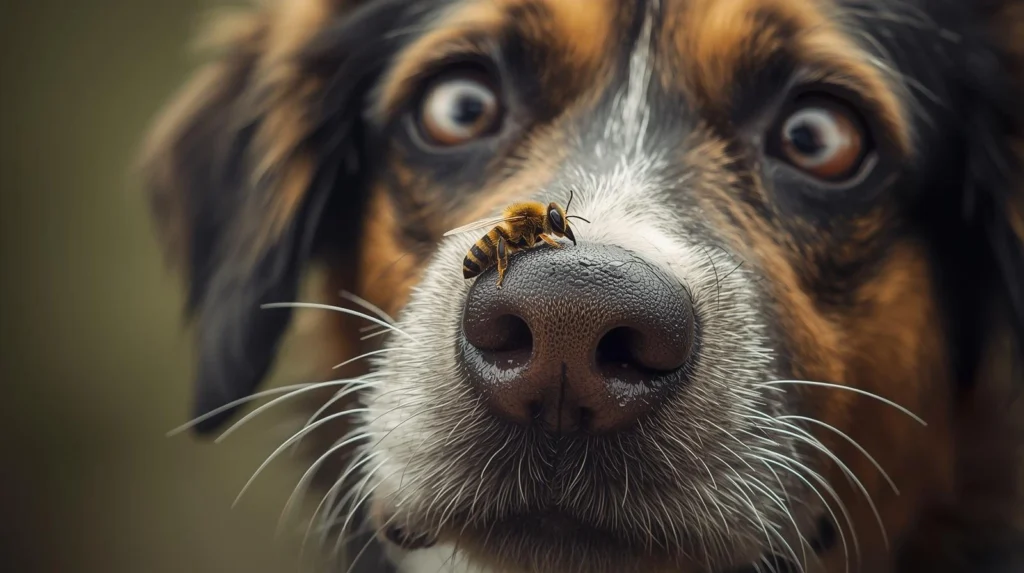
The most common areas for dogs stung by bees are the paws, snout, and face. Gently inspect your pet’s body to find the site of the sting. If your dog stung by bee in mouth, this is a higher priority due to potential airway obstruction.
2. Remove the Stinger Correctly
Unlike wasps, bees leave behind a barbed stinger that continues to pump venom into the skin.
- The Right Way: Use a stiff piece of cardboard or a credit card to scrape the stinger out horizontally.
- The Wrong Way: Never use tweezers or your fingers to pull it out, as squeezing the venom sac will inject more toxins into your pet.
3. Neutralize and Cool
Once the stinger is removed, apply a paste of baking soda and water to the area to help neutralize the acidic venom. Follow this with a cold compress or an ice pack wrapped in a towel for 10 minutes to reduce localized swelling and pain.
If your dog gets stung by bee, immediately remove the stinger by scraping it with a credit card, clean the area with mild soap, and apply a cold compress to minimize swelling. Monitor the dog for 30 to 60 minutes for signs of an allergic reaction, such as difficulty breathing or extreme lethargy.
Recognizing the Symptoms: Is It an Emergency?
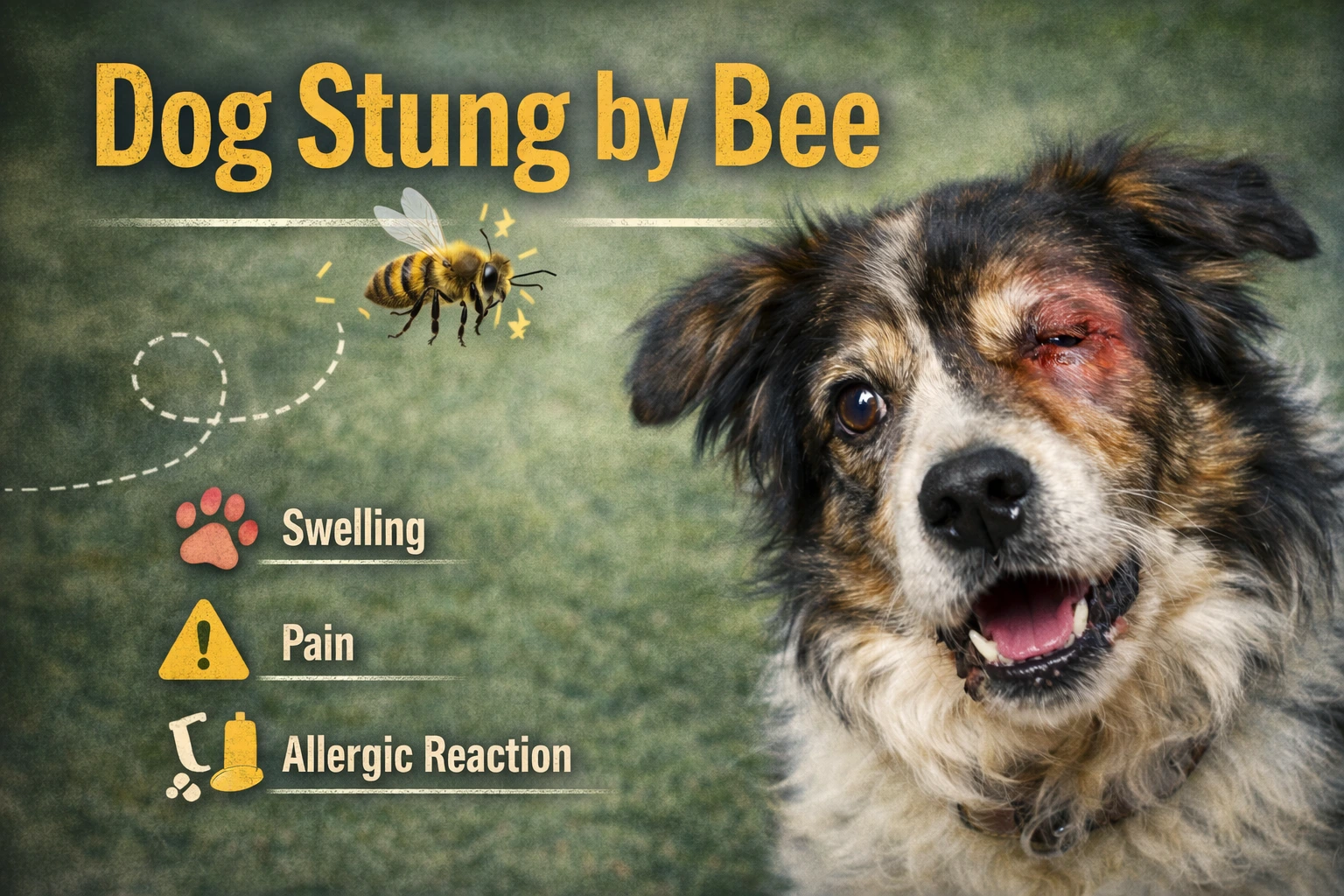
While most cases of a dog stung by a bee result in nothing more than minor irritation, some pets may experience a life-threatening anaphylactic reaction. It is crucial to differentiate between a localized reaction and a systemic one.
Localized Reactions (Mild)
A typical dog that got stung by a bee will exhibit:
- Localized swelling at the site.
- Pawing at the face or limping if the paw was hit.
- Whining or yelping immediately after the incident.
- Mild redness and heat around the wound.
Systemic Reactions (Severe/Anaphylaxis)
If dogs stung by bees are allergic, you may see:
- Difficulty breathing or wheezing.
- Swelling of the neck, throat, or entire face.
- Pale gums or a blue-ish tint to the tongue.
- Vomiting or sudden diarrhea.
- Collapse or seizures.
If you observe any of these severe symptoms after your dog got stung by bee, transport them to an emergency veterinarian immediately.
Special Cases: Dog Stung by Bee in Mouth or Throat
A dog stung by bee in mouth is a unique and potentially dangerous scenario. Because the mouth and throat are highly vascularized, swelling occurs rapidly. Furthermore, even moderate swelling in the throat can restrict the airway.
If you suspect your dog stung by bee in mouth because they were snapping at a flying insect, look for excessive drooling, repeated swallowing, or a panicked expression. In these instances, do not attempt to reach down the throat to remove a stinger yourself, as you risk being bitten or pushing the stinger deeper. Seek veterinary assistance immediately to ensure the airway remains clear.
Real-World Case Study: The Curious Retriever
In a recent case in a suburban neighborhood, a Golden Retriever named “Bailey” was found pawing at her face after playing near some clover. Her owner noticed the dog stung by bee symptoms—specifically a rapidly swelling muzzle.
By applying a cold compress and administering a vet-approved dose of an antihistamine (Diphenhydramine), the owner managed the localized reaction. However, because the dog stung by a bee near the eye, the owner still opted for a professional check-up to ensure no corneal damage occurred. This proactive approach highlights the importance of observation and professional consultation.
Home Care and Recovery for Dogs Stung by Bees
Once the initial crisis has passed and your vet has confirmed your pet is stable, home recovery focuses on comfort.
- Restrict Activity: Keep your pet quiet and indoors for at least 24 hours. Increased blood flow from exercise can worsen inflammation.
- Hydration: Ensure plenty of fresh water is available.
- Topical Relief: Continue using cool compresses if the area remains warm to the touch.
- Prevent Licking: If the sting is on the paw, your dog may lick it obsessively, leading to a secondary infection. Consider using an Elizabethan collar (the “cone of shame”) if necessary.
To help a dog that got stung by a bee, keep the pet calm and restricted from heavy exercise. Monitor the sting site for signs of infection, such as pus or increased redness, and consult a veterinarian before administering any over-the-counter medications like Benadryl to ensure the correct dosage for your dog’s weight.
Prevention: Keeping Your Yard Safe
Preventing a situation where your dog gets stung by bee is easier than treating the aftermath. While bees are vital for the ecosystem, you can manage the environment to reduce risks.
Avoid Flowering Ground Cover
If your dog spends a lot of time in the yard, avoid planting clover or lavender in their primary play area.
Supervise Outdoor Time
Peak bee activity occurs during the warmest parts of the day. Monitor your pet closely during these hours.
Train “Leave It”
Use positive reinforcement to teach your dog the “leave it” command. This can prevent them from snapping at bees or investigating hives.
Check for Hives
Regularly inspect the eaves of your house and the undersides of decks for developing nests.
When to Call the Vet Immediately
It is always better to be over-cautious when your my dog got stung by a bee. Contact a professional if:
- The sting is in the mouth, throat, or near the eye.
- The dog has been stung multiple times (dogs stung by bees in a swarm face a much higher toxin load).
- The swelling does not subside after a few hours.
- Your dog has a known history of severe allergies.
Professional treatment often involves injectable antihistamines, corticosteroids to reduce inflammation, and, in severe cases, epinephrine and IV fluids.
Conclusion
A dog stung by bee is a common occurrence, especially for curious pups who love the outdoors. By knowing what to do if dog gets stung by bee, you can mitigate pain and prevent serious complications. Always prioritize the removal of the stinger, monitor for allergic reactions, and maintain a calm environment for your pet.
Remember, while most dogs stung by bees recover quickly with basic first aid, your intuition as an owner is your best tool. If something feels wrong, don’t hesitate to contact your veterinarian.
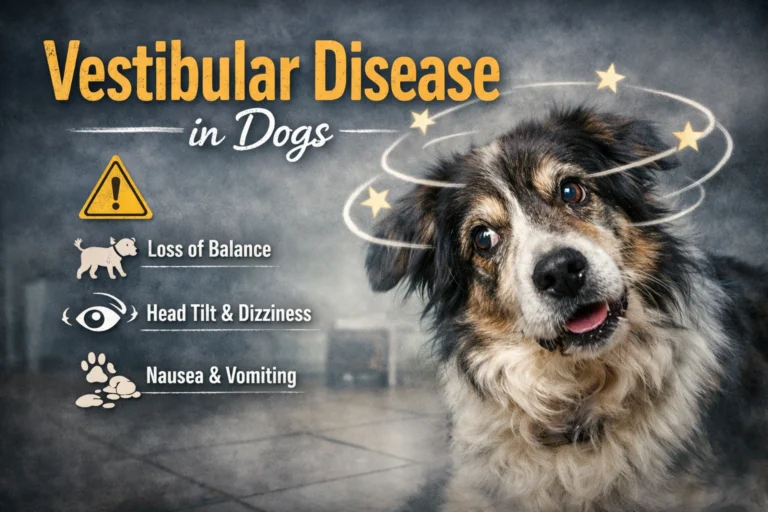
Is your dog acting dizzy? Learn how to spot and manage Vestibular Disease here.
Frequently Asked Questions
Can I give my dog Benadryl if they are stung by a bee?
Yes, many veterinarians recommend Diphenhydramine (Benadryl) for a dog stung by bee, but you must call your vet first for the correct dosage based on your dog’s current weight. Ensure the medication contains only Diphenhydramine and no xylitol or decongestants, which are toxic to dogs.
How long does the swelling last after a dog stung by a bee?
In most cases, localized swelling from a dog stung by a bee will peak within 24 hours and gradually subside over the next 2 to 3 days. If swelling increases after 24 hours, contact your vet.
What if my dog eats the bee?
If your dog stung by bee in mouth because they swallowed it, the risk of an internal sting is high. This can cause the throat to swell shut. Treat this as a medical emergency and head to a clinic immediately.
Is a wasp sting different from a bee sting?
Yes. While the treatment for dogs stung by bees is similar, wasps do not leave their stinger behind and can sting multiple times. Wasp venom is also alkaline, whereas bee venom is acidic.
How can I tell if my dog is in shock?
If your dog got stung by bee and begins breathing rapidly, has a racing heart, cold limbs, or very pale gums, they may be entering anaphylactic shock. This is a life-threatening condition requiring immediate veterinary intervention.