
The Canine Vision Guide: Can Dogs See in the Dark?
As a pet owner, you’ve likely watched your furry companion navigate a pitch-black hallway or chase a ball across a moonlit lawn with effortless precision. It often leads to the burning question: can dogs see in the dark? To understand your dog’s nocturnal capabilities, we must look beyond simple curiosity and dive into the biological marvels of the canine eye.
In this comprehensive guide, we will explore the science of canine vision, compare their sight to other species, and provide actionable insights for pet parents. Whether you are wondering “can my dog see in the dark” while they navigate your home at night or you’re curious about their evolutionary advantages, we have the expert answers you need.
Understanding Canine Nocturnal Vision
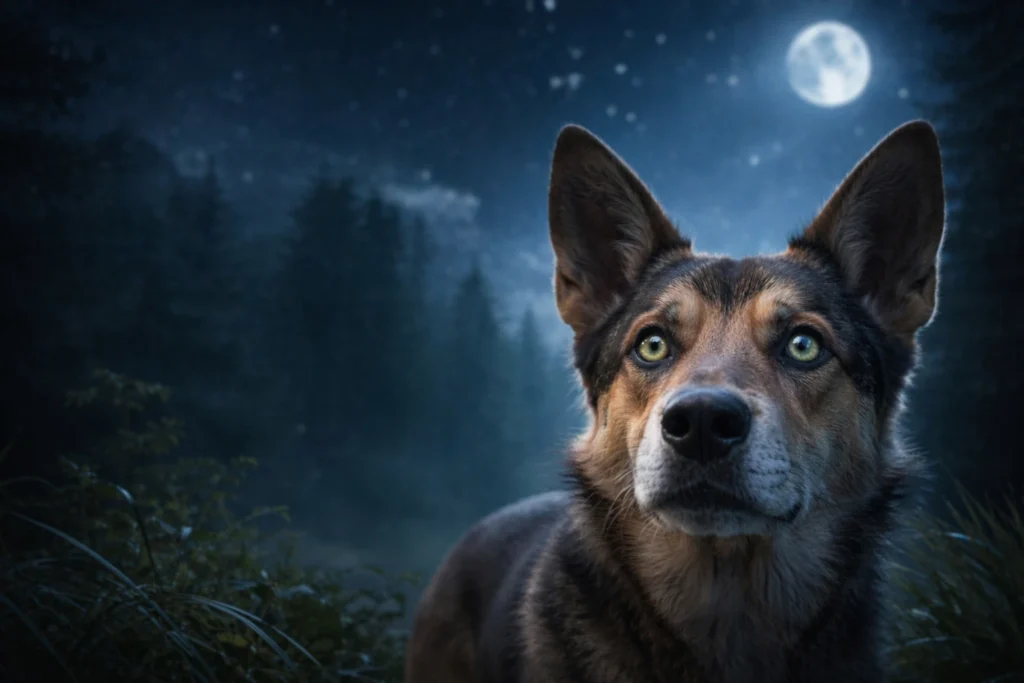
When asking how can dogs see in the dark, the answer lies in a specific anatomical feature called the tapetum lucidum. This mirror-like layer reflects light back through the retina, effectively giving the eye a second chance to absorb photons. This is why dogs’ eyes seem to glow with a spooky green or yellow hue when caught in a flashlight beam.
The Anatomy of the Dog Eye
Dogs possess a higher concentration of rods photoreceptor cells sensitive to low light than humans do. While humans have more cones (which process color and detail), dogs are evolutionarily designed to be crepuscular hunters, meaning they are most active at dawn and dusk.
- Rods: Responsible for detecting light and motion.
- Cones: Responsible for color perception and visual acuity.
- Tapetum Lucidum: The reflective layer that amplifies light.
Can dogs see in the dark well? Yes, significantly better than the average human, though they still require a small amount of ambient light to function. In total, absolute darkness (like a sealed basement), even a dog would be blind.
How Well Can Dogs See in the Dark?
If you are wondering how well can dogs see in the dark, think of it as “enhanced grayscale” navigation. While they don’t see in high-definition like we do during the day, their ability to perceive movement and shapes in the shadows is elite.
Comparative Vision: Dogs vs. Humans
Many owners ask, can dogs see in the dark better than humans? The answer is a resounding yes. Estimates suggest that dogs can see in light levels that are roughly five times lower than what a human requires. This is due to their larger pupils and the aforementioned reflective layer.
However, there is a trade-off. While can dogs see better in the dark than we can, their visual acuity is lower. A dog’s vision is roughly 20/75, meaning they must be 20 feet away to see an object that a human with 20/20 vision could see from 75 feet.
Key Factors in Night Vision:
- Motion Sensitivity: Dogs are hardwired to notice a squirrel twitching in the bushes at midnight.
- Field of View: Most dogs have a field of vision of 240 degrees, compared to our 180 degrees.
- Light Threshold: They need very little light to form a coherent image of their surroundings.
Can Dogs See in the Dark Like Cats?
A common comparison arises: can dogs see in the dark like cats? While both animals have a tapetum lucidum, feline vision is superior in low-light conditions.
Can cats and dogs see in the dark? Both can, but cats have eyes specifically designed for “hyper-nocturnal” activity. A cat requires only one-sixth the amount of light that a human needs, whereas a dog falls somewhere in the middle. Furthermore, can dogs and cats see in the dark with the same clarity? Generally, cats have better vertical pupils that allow for sharper focus in low light compared to the round pupils of a dog.
So, while can a dog see in the dark effectively? Yes. But in a race through a dark forest, the cat would likely take the gold medal.
Color Perception in the Shadows
A common myth is that dogs see in black and white. This is incorrect. But what colors can dogs see in the dark? Or more specifically, what colours can dogs see in the dark?
Dogs are dichromatic, meaning they see two primary colors: blue and yellow. In the dark, these colors wash out into shades of gray and blue. Because they lack the “red” cone, their world at night looks like a grainy, bluish-yellow vintage photograph. This limited spectrum is actually an advantage, as it prevents “visual noise” and allows them to focus purely on movement.
Practical Applications: Can My Dog See in the Dark?
“Can my dog see in the dark when I turn off the bedroom lights?” Most owners worry about their pets bumping into furniture. In a familiar environment like a home in London or a ranch in Texas, a dog uses a combination of their superior low-light vision and their whiskers (vibrissae) to navigate.
Training and Safety at Night
When considering can dogs see at night in the dark, we must also consider safety. If you are walking your dog in a dimly lit suburban neighborhood, they can see the oncoming car long before you can. However, because they struggle with depth perception in the dark, they might misjudge how fast that car is moving.
How good can dogs see in the dark when it comes to obstacles? They are excellent at avoiding stationary objects, but they may become startled by sudden shadows, leading to “fear barking.”
Can Dogs See Well in the Dark? Real-World Scenarios
To truly answer can dogs see well in the dark, we have to look at working dogs. Search and rescue dogs often work through the night. Their ability to perceive “biological motion” the specific way a human moves is what makes them so effective.
Can a dog see in the dark well enough to hunt? Historically, wolves (the ancestors of dogs) used the cover of night to surprise prey. This genetic legacy remains in your Golden Retriever or French Bulldog today. Even if they are just “hunting” for a dropped piece of popcorn, their eyes are perfectly tuned for the task.
When a Dog Can’t See in the Dark
If you notice your dog can’t see in the dark perhaps they are bumping into walls or hesitant to walk into a dark room it may be a sign of a medical issue.
- Progressive Retinal Atrophy (PRA): A genetic condition that often begins with “night blindness.”
- Cataracts: Clouding of the lens that blocks light.
- Glaucoma: Increased pressure that damages the optic nerve.
If you suspect your dog’s nocturnal vision is failing, a visit to a veterinary ophthalmologist is essential.
Maximizing Your Dog’s Visual Health
Now that we’ve established can dogs see in the dark at night, how do we support this ability? Nutrition plays a massive role. Antioxidants like Beta-carotene, Vitamin A, and Lutein help maintain the health of the retina.
Tips for Nighttime Safety:
- Use Reflective Gear: Even though can dogs see better in the dark than humans, we cannot see them. Use LED collars.
- Night Lights: If you have an elderly dog, a small night light can help them navigate as their vision naturally degrades.
- Consistent Layout: Try not to move furniture frequently, as dogs rely on “spatial mapping” alongside their vision.
The Verdict: Can Dogs See in the Dark?
So, can dogs see in the dark? The definitive answer is yes, they have a biological “night vision” system that far surpasses our own. While they don’t have the “super-vision” of a feline, they are master navigators of the twilight hours.
By understanding how well can dogs see in the dark, we can better appreciate their unique perspective on the world. They aren’t just seeing a dark room; they are seeing a world of motion, shapes, and textures that remain invisible to us.
Conclusion
Understanding the nuances of canine vision helps us become better pet parents. From the reflective brilliance of the tapetum lucidum to their incredible motion sensitivity, dogs are truly built for the night. While they may not see every color of the rainbow, their ability to guard our homes and navigate the shadows is a testament to their evolutionary journey. Next time you turn off the lights, remember: your dog isn’t in the dark they’re just seeing the world in a different light.
Would you like me to create a custom nighttime safety checklist for your specific dog breed?
Now that you have the answer to “can dogs see in the dark,” why stop there? Providing a safe environment for your pet goes beyond just visibility—it’s about what goes into their bowl.
Nutrition is the foundation of ocular health and overall longevity. If you are considering sharing a sweet summer snack with your furry friend, make sure you know the facts first. Are peaches a healthy treat or a hidden danger for your pup?
👉 Discover the Truth: Can Dogs Eat Peaches Safely?
Frequently Asked Questions
Can dogs see in the dark like cats?
Not quite. While both have the reflective tapetum lucidum, cats have specialized pupils and higher rod density that allow them to see in even lower light than dogs. However, dogs still see much better than humans.
Can dogs see in the dark better than humans?
Yes. Dogs can see in light levels approximately five times lower than humans can. Their eyes are optimized for detecting movement in low-light conditions, which is a trait inherited from their wolf ancestors.
What colors can dogs see in the dark?
Dogs see mostly in shades of blue and yellow. In the dark, these colors become muted, and they rely more on grayscale and motion detection than color recognition.
Why do my dog’s eyes glow at night?
This is caused by the tapetum lucidum, a layer behind the retina that reflects light back through the eye to improve night vision. This reflection is what creates the “glow” you see in photos or under a flashlight.
Can a dog see in total darkness?
No. Like all animals, dogs require at least some ambient light (from stars, the moon, or streetlights) to see. In a completely light-sealed environment, they would rely on their sense of smell and hearing instead.